


Email

info@ddtarget.com

Every day

10:00am - 6:00pm

Call us

011-41024601-06, 9873558384

March 31, 2026

Plant Physiology Flowcharts

Plant Physiology Flowcharts: Smart Way to Master NEET Biology

Plant physiology is one of the most conceptual yet scoring units in NEET Biology. Many students find it difficult due to multiple processes, cycles, and pathways. This is where Plant Physiology Flowcharts become extremely useful. Why Plant Physiology is Important for NEET Plant physiology has consistent weightage in NEET and includes many concept-based questions. Using Plant Physiology Flowcharts helps in understanding these processes step by step. What are Plant Physiology Flowcharts? Plant Physiology Flowcharts are visual representations of biological processes. They break down complex reactions into simple, easy-to-follow steps. They help you: Most Important Topics for Flowcharts To master Plant Physiology Flowcharts, focus on these high-weightage topics: 1. Photosynthesis Flowchart One of the most important topics in NEET. Key Steps: 👉 Questions are often based on steps and locations. 2. Respiration in Plants Flowchart Another highly important process. Main Stages: 👉 Focus on ATP production and location of each step. 3. Transpiration Flowchart Transpiration helps in water movement in plants. Key Process: 4. Mineral Nutrition Flowchart Important for understanding nutrient cycles. Focus On: 5. Plant Growth and Hormones Flowchart Very important for NEET. Hormones: 👉 Questions are often direct from NCERT. 6. Nitrogen Cycle Flowchart A commonly asked topic. Steps: Benefits of Using Plant Physiology Flowcharts The keyword Plant Physiology Flowcharts is trending because students prefer visual learning for better results. How to Make Effective Flowcharts Common Mistakes to Avoid How to Revise Using Flowcharts Why This Topic is Important for Ranking Focusing on Plant Physiology Flowcharts can: Final Thoughts Plant physiology doesn’t have to be difficult. With the help of Plant Physiology Flowcharts, you can convert complex concepts into simple steps and revise them quickly. For NEET aspirants, this approach is a game-changer. Practice consistently, rely on NCERT, and use flowcharts to strengthen your understanding.

Ecology Most Repeated Questions

Ecology Most Repeated Questions: Complete NEET Guide

Ecology is one of the most scoring and concept-based units in NEET Biology. Every year, several questions are directly or indirectly asked from this unit. If you focus on Ecology Most Repeated Questions, you can significantly boost your marks with relatively less effort. This detailed, human-written and SEO-friendly blog will help you understand the most important topics, repeated questions, and smart preparation strategies. Why Ecology is Important for NEET Ecology carries a good weightage in NEET and is considered easier compared to other biology units. Focusing on Ecology Most Repeated Questions helps in targeting the exact areas from where questions are asked every year. Important Chapters in Ecology To master Ecology Most Repeated Questions, you must cover these chapters thoroughly: Most NEET questions are picked directly from these chapters. Ecology Most Repeated Questions Topics Here are the most important and frequently asked topics in NEET: 1. Population Growth Models Questions are often asked about: 👉 You must understand graphs and differences. 2. Ecological Pyramids Very commonly asked topic. 👉 Remember: Energy pyramid is always upright. 3. Food Chain and Food Web 👉 Questions may involve energy transfer and examples. 4. Biodiversity Hotspots 👉 Direct factual questions are common. 5. Biogeochemical Cycles 👉 Focus on steps and key processes. 6. Environmental Issues Highly important for NEET. 👉 Many questions are directly from NCERT lines. 7. Species Interactions 👉 Learn definitions with examples. 8. Ecological Succession Most Repeated Questions in NEET (Examples) Here are some types of Ecology Most Repeated Questions: 👉 These questions are repeated in different forms every year. Smart Tips to Master Ecology for NEET Common Mistakes to Avoid How to Revise Ecology Quickly Why Ecology is a Rank Booster Focusing on Ecology Most Repeated Questions can help you: Final Thoughts Ecology is one of the easiest yet most important units for NEET. By focusing on Ecology Most Repeated Questions, you can prepare smartly and maximize your score without spending too much time.

Human Physiology Important Diagrams

Human Physiology Important Diagrams

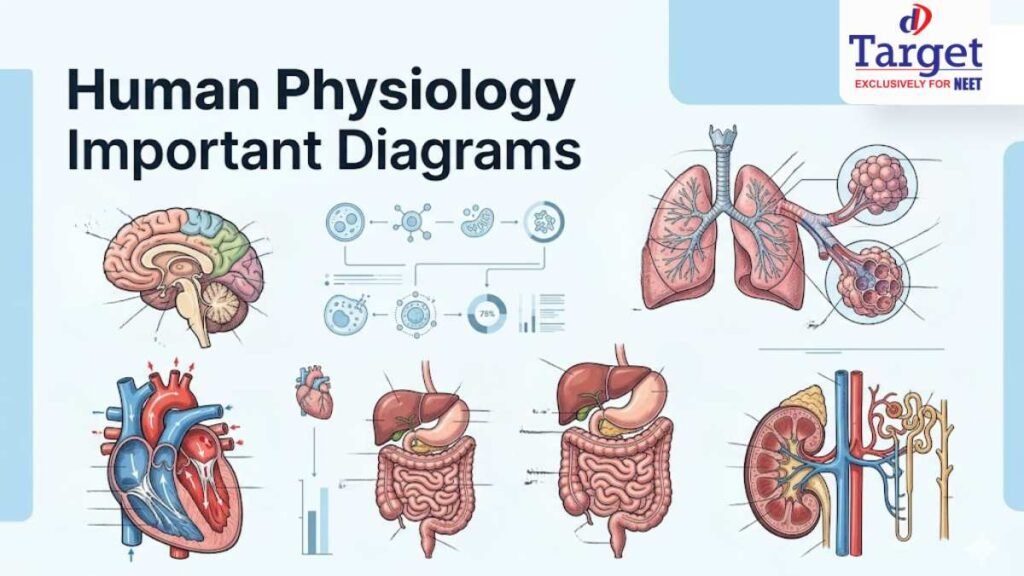
When it comes to NEET preparation, Human Physiology Important Diagrams play a crucial role in scoring high marks. Many students focus only on theory, but diagrams are equally important as they help in better understanding, quick revision, and accurate answering in exams. In this blog, you will get a detailed, SEO-friendly, and easy-to-understand guide on the most important diagrams in human physiology. Why Human Physiology Important Diagrams Matter in NEET Diagrams are not just for presentation—they are a powerful learning tool. Key Benefits: The keyword Human Physiology Important Diagrams is highly searched because diagrams simplify complex topics. Most Important Human Physiology Diagrams for NEET Let’s explore the diagrams you must prepare thoroughly. 1. Human Heart Diagram The heart is one of the most important diagrams in physiology. What to Focus: 👉 Questions are often based on labeling and blood circulation. 2. Nephron Diagram (Kidney Unit) The nephron is the structural and functional unit of the kidney. Key Parts: 👉 Important for understanding urine formation. 3. Human Brain Diagram The brain diagram is very important for NEET. Focus Areas: 👉 Questions may involve functions and labeling. 4. Digestive System Diagram This diagram helps understand food digestion and absorption. Key Organs: 5. Respiratory System Diagram Important for understanding breathing and gas exchange. Focus On: 6. Structure of Eye A very common NEET diagram. Key Parts: 7. Structure of Ear Important for hearing and balance. Parts: 8. Male and Female Reproductive System Very important for NEET biology. Focus: Tips to Master Human Physiology Important Diagrams 1. Practice Drawing Daily Even rough sketches help in memorization. 2. Label Everything Clearly Labeling is often asked in exams. 3. Use NCERT Diagrams Most NEET questions come directly from NCERT. 4. Revise with Flowcharts Combine diagrams with flowcharts for better understanding. Common Mistakes Students Make How to Use Diagrams for Quick Revision Why This Topic is Important for Ranking The keyword Human Physiology Important Diagrams is trending because: Real-Life Importance of Physiology Diagrams Final Thoughts Mastering Human Physiology Important Diagrams can give you a strong advantage in NEET preparation. These diagrams not only help in scoring marks but also build a deep understanding of how the human body works.

Fill this form for admission


    This will close in 120 seconds