

Email

info@ddtarget.com

Every day

10:00am - 6:00pm

Call us

011-41024601-06, 9873558384

April 27, 2026

Cell Cycle and Cell Division Shortcuts

Cell Cycle and Cell Division Shortcuts

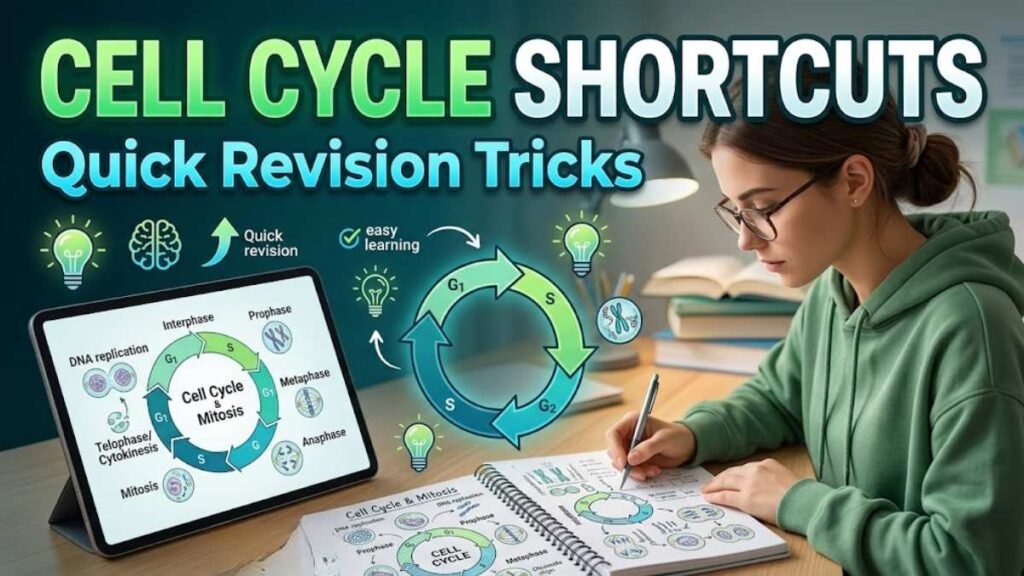
The chapter “Cell Cycle and Cell Division” is one of the most important and scoring topics in Biology for NEET. However, many students find it difficult to remember phases, sequences, and key events. This is where Cell Cycle and Cell Division Shortcuts become extremely useful. With the right tricks, mnemonics, and conceptual clarity, you can easily retain the entire chapter and answer questions quickly in the exam. In this detailed guide, we will cover the best Cell Cycle and Cell Division Shortcuts along with smart strategies to help you master this topic efficiently. Why This Chapter is Important for NEET High-Weightage Topic Questions are frequently asked from mitosis, meiosis, and cell cycle phases. Concept + Memory Based You need both understanding and memorization. Easy Scoring With proper revision and shortcuts, you can answer questions quickly and accurately. Overview of Cell Cycle The cell cycle is divided into two main phases: Shortcut to Remember Cell Cycle Phases Interphase Stages: G1, S, G2 👉 Shortcut: “Grow – Synthesize – Grow Again” This is one of the simplest Cell Cycle and Cell Division Shortcuts to remember sequence and function. M Phase (Mitosis) Stages The stages of mitosis are: Shortcut to Remember Mitosis Stages 👉 Mnemonic: “Please Make A Tea” (PMAT) This is one of the most popular Cell Cycle and Cell Division Shortcuts used by NEET aspirants. Key Events in Mitosis (Quick Tricks) Prophase 👉 Trick: “Packing Phase” Metaphase 👉 Trick: “Middle Line” Anaphase 👉 Trick: “Apart Phase” Telophase 👉 Trick: “Two Cells Forming” Meiosis: Important for NEET Meiosis has two divisions: Shortcut for Meiosis I Stages Same as mitosis: PMAT 👉 Use same mnemonic:“Please Make A Tea” Special Feature Shortcut for Meiosis I 👉 Key event: Crossing Over (in Prophase I) 👉 Trick: “Mixing of Genes” Differences Between Mitosis and Meiosis (Shortcut Table) Feature Mitosis Meiosis Division Type Single Double Daughter Cells 2 identical 4 different Chromosome No. Same Half 👉 Shortcut:“Mitosis = Maintain, Meiosis = Mix & Reduce” This is one of the most effective Cell Cycle and Cell Division Shortcuts for quick revision. Important Terms Shortcut Cytokinesis Division of cytoplasm 👉 Trick: “Cyto = Cell body division” Karyokinesis Division of nucleus 👉 Trick: “Karyo = Nucleus division” Diagram-Based Shortcut Diagrams are very important in this chapter. 👉 Tip: Common Mistakes Students Make Avoid these mistakes while using Cell Cycle and Cell Division Shortcuts. Smart Study Strategy Step 1: Understand Concepts Don’t rely only on shortcuts—understand basics first. Step 2: Use Mnemonics Apply Cell Cycle and Cell Division Shortcuts for memorization. Step 3: Revise Regularly Repeat the shortcuts daily. Step 4: Practice MCQs Solve NEET-level questions. Quick Revision Tricks Last-Minute Revision Strategy Before the exam: Why Shortcuts Work Final Thoughts The chapter “Cell Cycle and Cell Division” becomes easy when you combine conceptual understanding with smart memorization techniques. These Cell Cycle and Cell Division Shortcuts are designed to help you remember complex processes in a simple and effective way. If you practice these shortcuts regularly and revise consistently, you can easily score full marks from this topic. Remember, success in NEET is not about studying harder—it’s about studying smarter. Master these Cell Cycle and Cell Division Shortcuts, stay consistent, and you’ll be well-prepared to tackle any question from this chapter in the exam.
Biotechnology Application in Medicine (1)

Biotechnology Application in Medicine:

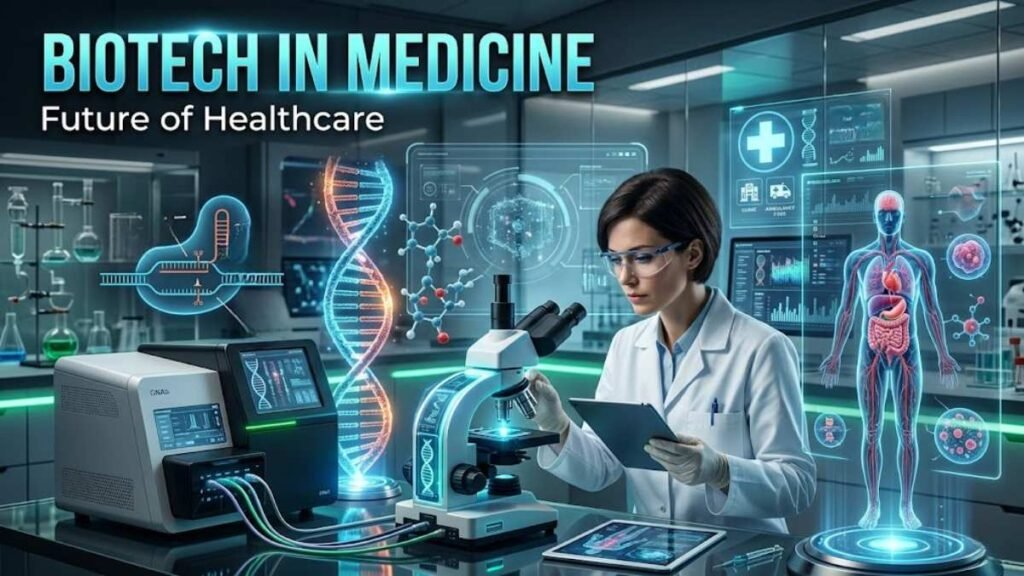
Biotechnology has revolutionized the field of medicine by introducing advanced techniques for diagnosis, treatment, and prevention of diseases. From life-saving vaccines to cutting-edge gene therapies, the Biotechnology Application in Medicine has become an integral part of modern healthcare. For students preparing for competitive exams and for anyone interested in science, understanding the scope and impact of biotechnology in medicine is essential. This detailed blog explores the major Biotechnology Application in Medicine, its real-world uses, and its growing importance in the future of healthcare. What is Biotechnology in Medicine? Biotechnology in medicine refers to the use of biological systems, living organisms, or their components to develop medical products and technologies. The goal is to improve human health by creating more effective treatments, accurate diagnostic tools, and preventive measures. The Biotechnology Application in Medicine combines biology, chemistry, and technology to solve complex medical problems. Importance of Biotechnology in Modern Medicine Advanced Disease Treatment Biotechnology enables targeted therapies that treat diseases at the molecular level. Early Diagnosis Modern diagnostic tools help detect diseases at an early stage. Safer Medicines Biotechnology-based drugs are often more precise and have fewer side effects. Personalized Healthcare Treatments can be tailored according to an individual’s genetic makeup. Major Biotechnology Application in Medicine 1. Vaccine Development Vaccines are one of the most important Biotechnology Application in Medicine. How It Works Biotechnology helps in developing vaccines using weakened or inactive pathogens or genetic material. Examples 👉 Vaccines have played a crucial role in controlling infectious diseases worldwide. 2. Genetic Engineering Genetic engineering involves modifying DNA to treat or prevent diseases. Applications Importance It allows scientists to target the root cause of diseases. This is a powerful Biotechnology Application in Medicine that is shaping future treatments. 3. Production of Biopharmaceuticals Biotechnology is used to produce medicines such as: Example Recombinant DNA technology is used to produce human insulin safely. This is one of the most widely used Biotechnology Application in Medicine today. 4. Diagnostic Techniques Biotechnology has improved diagnostic accuracy significantly. Tools Used Benefits These advancements highlight the importance of Biotechnology Application in Medicine in diagnostics. 5. Stem Cell Therapy Stem cells have the ability to develop into different types of cells. Applications Future Scope Stem cell therapy is expected to revolutionize regenerative medicine. 6. Monoclonal Antibodies Monoclonal antibodies are lab-made molecules used to fight diseases. Uses Advantage They target specific cells, reducing damage to healthy tissues. This is an advanced Biotechnology Application in Medicine with high precision. 7. Personalized Medicine Personalized medicine uses genetic information to customize treatments. Benefits Example Cancer treatments based on genetic profiling. 8. Gene Therapy Gene therapy involves replacing or repairing defective genes. Applications This emerging field is a promising Biotechnology Application in Medicine for future cures. Advantages of Biotechnology in Medicine Challenges of Biotechnology in Medicine Future Scope of Biotechnology in Medicine The future of Biotechnology Application in Medicine is extremely promising. Expected Advancements Biotechnology will continue to redefine healthcare in the coming decades. Role of Biotechnology in Combating Diseases Biotechnology has played a major role in: This shows how vital Biotechnology Application in Medicine is for global health. Conclusion The Biotechnology Application in Medicine has transformed healthcare by providing innovative solutions for diagnosis, treatment, and prevention of diseases. From vaccines to gene therapy, biotechnology continues to push the boundaries of what is possible in medicine. As technology advances, the role of biotechnology will only grow stronger, offering hope for curing previously untreatable diseases. Understanding the Biotechnology Application in Medicine is not only important for academic purposes but also for appreciating how science is shaping the future of human health.

Fill this form for admission


    This will close in 120 seconds