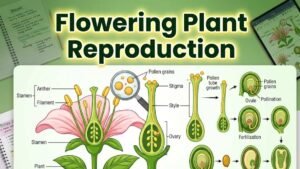


Plant physiology is one of the most conceptual yet scoring units in NEET Biology. Many students find it difficult due to multiple processes, cycles, and pathways. This is where Plant Physiology Flowcharts become extremely useful.
Why Plant Physiology is Important for NEET
Plant physiology has consistent weightage in NEET and includes many concept-based questions.
- Questions are mostly NCERT-based
- Includes processes like photosynthesis and respiration
- Requires clarity rather than memorization
Using Plant Physiology Flowcharts helps in understanding these processes step by step.
What are Plant Physiology Flowcharts?
Plant Physiology Flowcharts are visual representations of biological processes. They break down complex reactions into simple, easy-to-follow steps.
They help you:
- Understand sequence of reactions
- Revise quickly before exams
- Retain concepts for a longer time
Most Important Topics for Flowcharts
To master Plant Physiology Flowcharts, focus on these high-weightage topics:
1. Photosynthesis Flowchart
One of the most important topics in NEET.
Key Steps:
- Light reaction (in thylakoid)
- ATP and NADPH formation
- Dark reaction (Calvin cycle)
- Glucose formation
👉 Questions are often based on steps and locations.
2. Respiration in Plants Flowchart
Another highly important process.
Main Stages:
- Glycolysis
- Krebs Cycle
- Electron Transport Chain
👉 Focus on ATP production and location of each step.
3. Transpiration Flowchart
Transpiration helps in water movement in plants.
Key Process:
- Water absorption by roots
- Movement through xylem
- Loss of water via stomata
4. Mineral Nutrition Flowchart
Important for understanding nutrient cycles.
Focus On:
- Macronutrients and micronutrients
- Deficiency symptoms
- Absorption and transport
5. Plant Growth and Hormones Flowchart
Very important for NEET.
Hormones:
- Auxin
- Gibberellin
- Cytokinin
- Ethylene
- Abscisic acid
👉 Questions are often direct from NCERT.
6. Nitrogen Cycle Flowchart
A commonly asked topic.
Steps:
- Nitrogen fixation
- Nitrification
- Assimilation
- Denitrification
Benefits of Using Plant Physiology Flowcharts
- Simplifies complex processes
- Improves memory retention
- Helps in quick revision
- Reduces confusion during exams
The keyword Plant Physiology Flowcharts is trending because students prefer visual learning for better results.
How to Make Effective Flowcharts
- Use arrows to show direction
- Keep steps short and clear
- Highlight key terms
- Use colors for better memory
- Practice drawing regularly
Common Mistakes to Avoid
- Memorizing without understanding
- Ignoring steps in processes
- Not practicing diagrams
- Skipping NCERT flowcharts
How to Revise Using Flowcharts
- Revise daily for 15–20 minutes
- Combine flowcharts with notes
- Practice MCQs based on them
- Use them before mock tests
Why This Topic is Important for Ranking
Focusing on Plant Physiology Flowcharts can:
- Improve conceptual clarity
- Save time during revision
- Increase accuracy in NEET
- Help in solving tricky questions
Final Thoughts
Plant physiology doesn’t have to be difficult. With the help of Plant Physiology Flowcharts, you can convert complex concepts into simple steps and revise them quickly.
For NEET aspirants, this approach is a game-changer. Practice consistently, rely on NCERT, and use flowcharts to strengthen your understanding.