
Email

info@ddtarget.com

Every day

10:00am - 6:00pm

Call us

011-41024601-06, 9873558384

ddtarget.com

Indian Council of Medical Research

ICMR Full Form: Indian Council of Medical Research

The ICMR Full Form is Indian Council of Medical Research. It is the top organization in India responsible for planning, promoting, and conducting biomedical research. For NEET aspirants, ICMR is an important topic in Biology and general medical awareness. What is ICMR? The Indian Council of Medical Research (ICMR) is an autonomous body under the Ministry of Health and Family Welfare, Government of India. It plays a key role in advancing medical research and improving public health in the country. The ICMR Full Form is frequently asked in competitive exams and is essential for students aiming for a career in medicine and research. Establishment and Headquarters ICMR is one of the oldest and most respected medical research organizations in India. Objectives of ICMR ICMR works to improve health outcomes through research and innovation. Main Objectives: The ICMR Full Form reflects India’s commitment to scientific research in healthcare. Major Functions of ICMR ICMR carries out various activities to support medical science. Key Functions: Role of ICMR in Healthcare ICMR has played a crucial role in tackling major health challenges in India. Key Contributions: The ICMR Full Form is closely linked with India’s progress in medical science. Importance of ICMR for NEET Students For NEET aspirants, ICMR is an important topic under Biology and general awareness. Why You Should Learn ICMR: Career Opportunities in ICMR Students interested in research can explore opportunities in ICMR: Final Thoughts The ICMR Full Form – Indian Council of Medical Research represents the backbone of medical research in India. It plays a vital role in improving healthcare, controlling diseases, and advancing scientific knowledge. For aspiring doctors and researchers, understanding ICMR is essential to appreciate how medical science evolves and impacts society.


RNA – Ribonucleic Acid.

RNA Full Form: Ribonucleic Acid

The RNA Full Form is Ribonucleic Acid. It is a crucial biological molecule that plays a key role in protein synthesis and gene expression. For NEET aspirants, RNA is an important topic in molecular biology and genetics. What is RNA? Ribonucleic Acid (RNA) is a single-stranded molecule that helps in converting the genetic information stored in DNA into proteins. The RNA Full Form is commonly asked in exams and is essential for understanding how cells function. Structure of RNA RNA is structurally similar to DNA but has some important differences. Key Components: Types of Nitrogen Bases in RNA: Types of RNA RNA exists in different forms, each with a specific function. 1. mRNA (Messenger RNA) 2. tRNA (Transfer RNA) 3. rRNA (Ribosomal RNA) Understanding these types is important for exams and conceptual clarity. Functions of RNA RNA plays a vital role in the functioning of cells. Main Functions: The RNA Full Form represents the working mechanism of genetic information. RNA vs DNA (Key Differences) Importance of RNA in Medical Science RNA has gained major importance in modern medicine. Applications: Importance of RNA for NEET Students For NEET preparation, the RNA Full Form is a high-weightage topic. Why You Should Learn RNA: Final Thoughts The RNA Full Form – Ribonucleic Acid is a key molecule that connects DNA to protein formation. Without RNA, the genetic code stored in DNA cannot be expressed. For aspiring medical students, mastering RNA is essential for both exams and future understanding of advanced biology.

DNA – Deoxyribonucleic AcidaDNA Full Form: Deoxyribonucleic Acid

DNA Full Form: Deoxyribonucleic Acid

The DNA Full Form is Deoxyribonucleic Acid. It is one of the most important molecules in biology, carrying the genetic information that determines how living organisms grow, function, and reproduce. For NEET aspirants, DNA is a core topic in genetics and molecular biology. What is DNA? Deoxyribonucleic Acid (DNA) is the hereditary material present in almost all living organisms. It contains the instructions needed for the development and functioning of life. The DNA Full Form is frequently asked in exams and forms the foundation of modern biology. Structure of DNA DNA has a unique structure known as the double helix. Key Components: Types of Nitrogen Bases: Base Pairing Rule: This structure helps DNA store and transmit genetic information accurately. Functions of DNA DNA plays a crucial role in life processes. Main Functions: The DNA Full Form represents the blueprint of life. Location of DNA Importance of DNA in Medical Science DNA has revolutionized modern medicine and research. Applications: DNA Replication DNA can make copies of itself through a process called replication. This process is essential for growth and reproduction. Importance of DNA for NEET Students For NEET aspirants, the DNA Full Form is a high-weightage topic. Why You Should Learn DNA: DNA vs RNA (Basic Difference) Final Thoughts The DNA Full Form – Deoxyribonucleic Acid is fundamental to understanding life itself. From inheritance to advanced medical research, DNA plays a central role in biology. Mastering DNA concepts is essential for NEET preparation and for building a strong foundation in medical science.

CT Scan Full Form Computed Tomography Scan

CT Scan Full Form: Computed Tomography Scan

The CT Scan Full Form is Computed Tomography Scan. It is a widely used medical imaging technique that helps doctors see detailed cross-sectional images of the human body. For NEET aspirants and medical students, understanding CT Scan is important as it connects physics concepts with real-life medical applications. What is a CT Scan? A Computed Tomography (CT) Scan is an advanced imaging method that uses X-rays along with computer technology to create detailed images of internal organs, bones, and tissues. Unlike a normal X-ray, which gives a flat image, a CT scan provides 3D cross-sectional views, making diagnosis more accurate. The CT Scan Full Form is commonly asked in exams and frequently used in hospitals. How Does a CT Scan Work? A CT scan works using rotating X-ray beams and detectors. These slices help doctors examine the body layer by layer. Why is CT Scan Important? CT scans are extremely useful in diagnosing a wide range of conditions. Major Uses: The CT Scan Full Form represents a fast and reliable diagnostic tool. Advantages of CT Scan Limitations of CT Scan Applications of CT Scan in Medical Field CT scans are essential for quick diagnosis and decision-making. CT Scan vs MRI (Quick Comparison) Understanding this comparison is important for exams. Importance of CT Scan for NEET Students For NEET preparation, the CT Scan Full Form is important in both Physics and Biology. Why You Should Learn CT Scan: Final Thoughts The CT Scan Full Form – Computed Tomography Scan is a crucial advancement in medical imaging. It allows doctors to quickly and accurately diagnose internal conditions, especially in emergency situations. For aspiring doctors, learning about CT scans builds a strong foundation for understanding modern diagnostic techniques.

MRI Full Form Magnetic Resonance Imaging

MRI Full Form: Magnetic Resonance Imaging

The MRI Full Form is Magnetic Resonance Imaging. It is an advanced medical imaging technique used to create detailed images of organs and tissues inside the human body. For NEET aspirants and medical students, understanding MRI is crucial as it plays a major role in modern diagnostics. What is MRI? Magnetic Resonance Imaging (MRI) is a non-invasive diagnostic method that uses strong magnetic fields and radio waves to produce highly detailed images of the body. Unlike X-rays or CT scans, MRI does not use harmful radiation, making it a safer option for many patients. The MRI Full Form is commonly asked in exams and is widely used in hospitals and research centers. How Does MRI Work? MRI works on the principle of nuclear magnetic resonance. When a person enters the MRI machine: Why is MRI Important? MRI is highly useful for diagnosing a wide range of medical conditions. Major Uses: The MRI Full Form represents one of the most powerful tools in modern medical imaging. Advantages of MRI These advantages make MRI superior in many diagnostic cases. Limitations of MRI Applications of MRI in Medical Field MRI has become essential in accurate diagnosis and treatment planning. Importance of MRI for NEET Students For NEET preparation, the MRI Full Form is an important concept in Physics (magnetism) and Biology (medical applications). Why You Should Learn MRI: MRI vs CT Scan (Quick Comparison) Final Thoughts The MRI Full Form – Magnetic Resonance Imaging is a cornerstone of modern medical diagnostics. It allows doctors to see inside the human body with incredible clarity without using radiation. For students aiming for a career in medicine, mastering concepts like MRI is essential for both exams and future clinical practice.

ECG Full Form - Electrocardiogram

ECG Full Form: Electrocardiogram

The ECG Full Form is Electrocardiogram. It is one of the most important diagnostic tools used in the medical field to monitor and evaluate heart health. For students preparing for NEET and other medical entrance exams, understanding ECG is essential as it forms a key part of human physiology and clinical practice. What is an ECG? An Electrocardiogram (ECG) is a medical test that records the electrical activity of the heart over a period of time. Every time the heart beats, it produces electrical signals that control the contraction and relaxation of heart muscles. An ECG machine captures these signals and displays them as a graph. The ECG Full Form is frequently asked in exams and is also widely used in hospitals for diagnosing heart conditions. How Does an ECG Work? An ECG works by placing small electrodes on the skin, usually on the chest, arms, and legs. These electrodes detect electrical signals generated by the heart and send them to a machine, which records them as waves. Key Components of ECG Waves: Understanding these waves is crucial for analyzing heart function. Why is ECG Important? The ECG plays a vital role in diagnosing various heart-related problems. Major Uses: The ECG Full Form is not just theoretical knowledge but a real-life lifesaving tool. Types of ECG Tests There are different types of ECG depending on the requirement: 1. Resting ECG Performed while the patient is lying still. 2. Stress ECG Done while the patient exercises, usually on a treadmill. 3. Holter Monitoring Continuous ECG recording for 24–48 hours. Applications of ECG in Medical Field Importance of ECG for NEET Students For NEET aspirants, the ECG Full Form is an important topic under human physiology. Why You Should Learn ECG: Final Thoughts The ECG Full Form – Electrocardiogram is a fundamental concept in medical science. It provides crucial insights into heart health and helps doctors detect life-threatening conditions early. A strong understanding of ECG not only helps in exams like NEET but also builds a foundation for a successful career in the medical field.

ICU Full Form Intensive Care Unit

ICU Full Form: Intensive Care Unit

The ICU Full Form is Intensive Care Unit. It is a specialized department in hospitals that provides critical care to seriously ill patients. What is ICU? ICU is a high-tech medical unit where patients with life-threatening conditions are closely monitored and treated. The ICU Full Form is an important term for students interested in medical science. Features of ICU The ICU is equipped with advanced medical technology. Key Features Importance of ICU ICU plays a crucial role in saving lives. Key Importance Understanding the ICU Full Form is essential for medical aspirants. Types of ICU Different types of ICU units include: Final Thoughts The ICU Full Form—Intensive Care Unit—represents one of the most critical areas in healthcare. It highlights the importance of advanced medical care and skilled professionals.

OPD Full Form Outpatient Department

OPD Full Form: Outpatient Department

The OPD Full Form is Outpatient Department. It is one of the most important sections in a hospital where patients receive consultation and treatment without being admitted. What is OPD? OPD (Outpatient Department) is the area in a hospital where patients visit doctors for diagnosis, check-ups, and minor treatments. The OPD Full Form is widely used in hospitals and is important for students preparing for medical careers. Functions of OPD The OPD plays a key role in healthcare services. Main Functions Understanding the OPD Full Form helps students learn how hospitals function. Importance of OPD in Hospitals The OPD is the first point of contact between patients and doctors. Key Importance The OPD Full Form is essential knowledge for every medical aspirant. Types of OPD Services Hospitals provide different OPD services such as: Career Relevance of OPD Doctors working in OPD gain: This makes understanding the OPD Full Form important for future doctors. Final Thoughts The OPD Full Form—Outpatient Department—is a vital part of any healthcare system. It ensures that patients receive timely and effective treatment without hospitalization.

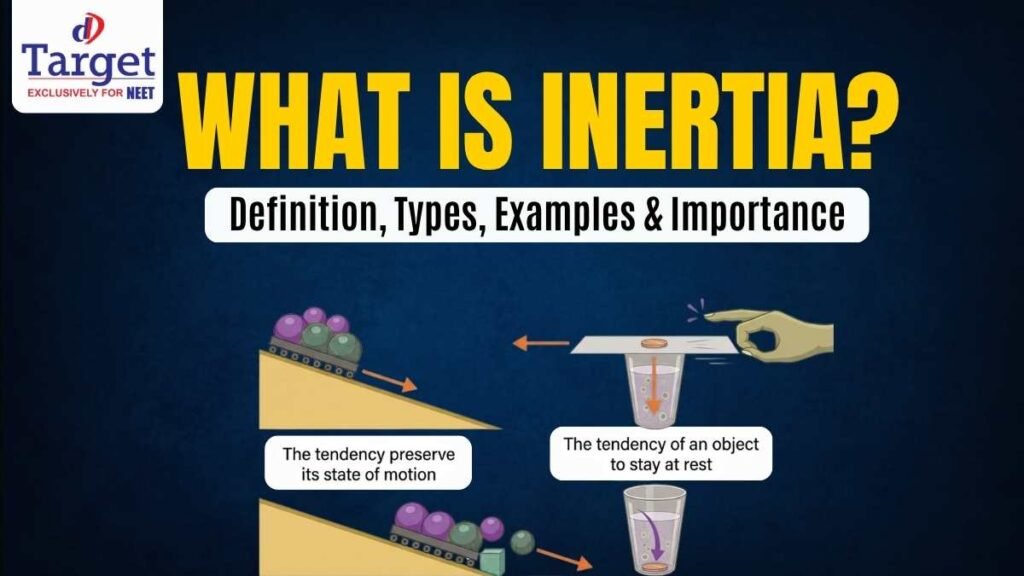
What is Inertia? Definition, Types, Examples & Importance

What is Inertia? Definition, Types, Examples & Importance

In Physics, one of the most fundamental and important concepts is inertia. Whether you are preparing for school exams, JEE, or NEET, understanding inertia helps you build a strong foundation in mechanics. At DD Target PMT, we simplify such important concepts to help students grasp them easily and apply them effectively in exams. What is Inertia? Inertia is the property of an object to resist any change in its state of rest or motion. In simple words: This behavior continues unless an external force acts on the object. Real-Life Example of Inertia Imagine you are sitting in a car and the driver suddenly applies brakes. You feel pushed forward. This happens because your body wants to remain in motion even though the car has stopped. This is a perfect example of inertia in everyday life. Newton’s First Law of Motion (Law of Inertia) The concept of inertia is explained by Newton’s First Law of Motion, which states: An object at rest remains at rest, and an object in uniform motion continues in a straight line unless acted upon by an external force. This law is also called the Law of Inertia. Types of Inertia Inertia can be classified into three types: 1. Inertia of Rest The tendency of an object to remain at rest. Example: A book lying on a table does not move unless pushed. 2. Inertia of Motion The tendency of an object to continue moving. Example: A moving bus continues to move unless brakes are applied. 3. Inertia of Direction The tendency of an object to resist changes in its direction. Example: When a car takes a turn, passengers feel pushed sideways. Factors Affecting Inertia Mass and Inertia Inertia depends on the mass of an object. This means heavier objects are harder to move or stop compared to lighter ones. Inertial Frames of Reference An inertial frame of reference is a frame where Newton’s First Law holds true. In such frames: This concept is important for understanding motion in physics. Applications of Inertia in Daily Life Inertia is not just a theory—it has many practical applications. Vehicle Safety Space Science Sports Engineering Why is Inertia Important for Students? For students preparing for JEE and NEET, inertia is a key concept in Physics. Importance At DD Target PMT, we ensure students gain conceptual clarity along with problem-solving skills. Frequently Asked Questions (FAQs) What is inertia in simple words? Inertia is the tendency of an object to resist any change in its motion or rest. Who discovered inertia? The concept of inertia was given by Sir Isaac Newton in his First Law of Motion. How is inertia related to mass? Inertia is directly proportional to mass. Heavier objects have greater inertia. Can inertia be seen in daily life? Yes, inertia is observed in situations like sudden braking, turning vehicles, or moving objects. Final Thoughts Inertia is a fundamental concept that explains how objects behave in motion and at rest. From daily life experiences to advanced scientific applications, inertia plays a crucial role in understanding the physical world. By mastering concepts like inertia, students can build a strong base in Physics and perform better in competitive exams. At DD Target PMT, we help students simplify complex topics and prepare with confidence for exams like JEE and NEET.

MS Full Form Master of Surgery

MS Full Form: Master of Surgery

The MS Full Form is Master of Surgery. It is a postgraduate medical degree pursued by students after completing MBBS, especially those who are interested in surgical fields. At DD Target PMT, we guide students not only to crack NEET but also to understand future career paths like MS and MD. What is MS Course? MS (Master of Surgery) is an advanced medical degree focused on surgical training. It prepares doctors to perform surgeries and handle complex medical procedures. The MS Full Form is commonly searched by students who want to specialize in surgery after MBBS. Duration of MS Course Students gain practical experience in operation theatres and hospitals. Eligibility for MS To pursue MS, students must: Understanding the MS Full Form is essential for planning a career in surgery. Popular Specializations in MS Students can choose various surgical branches such as: These fields offer great career growth for aspiring surgeons. Career Opportunities After MS After completing MS, students can: The MS Full Form represents a prestigious and highly skilled career in medicine. Final Thoughts The MS Full Form—Master of Surgery—is ideal for students who are passionate about surgical procedures and patient care. With dedication and the right guidance, students can build a successful career as a surgeon.

Fill this form for admission


    This will close in 120 seconds