

Email

info@ddtarget.com

Every day

10:00am - 6:00pm

Call us

011-41024601-06, 9873558384

NEET

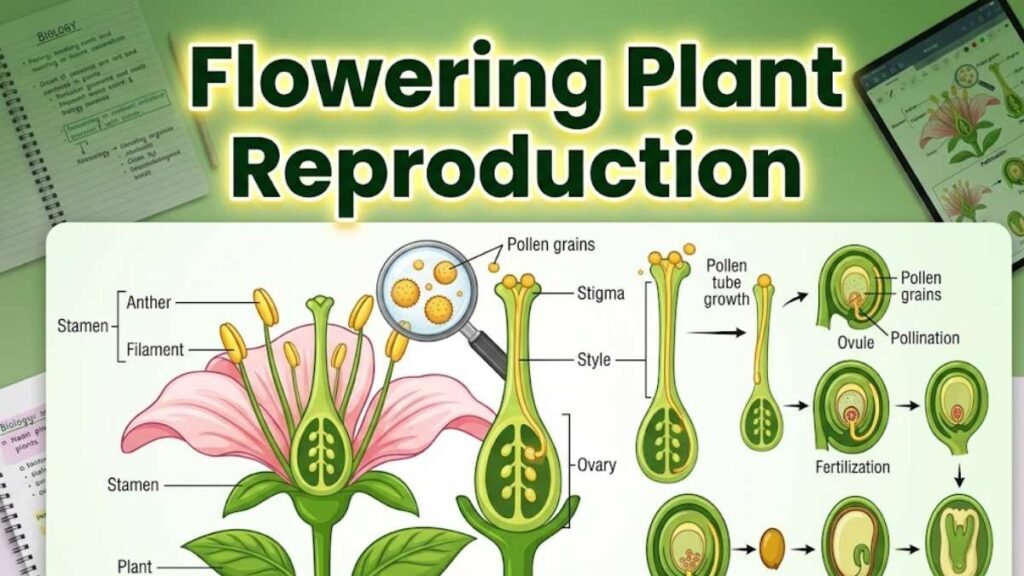
Reproduction in Flowering Plants Summary

Reproduction in Flowering Plants Summary

The chapter Reproduction in Flowering Plants Summary is one of the most important topics in Class 12 Biology and plays a significant role in NEET preparation. It focuses on how flowering plants reproduce sexually, covering everything from flower structure to seed formation. A clear understanding of this chapter helps students score high marks, as many questions are directly based on NCERT concepts, diagrams, and definitions. In this detailed Reproduction in flowering plants summary class 12, we will simplify the entire chapter in an easy-to-understand and exam-oriented manner. Introduction to Reproduction in Flowering Plants Reproduction is the biological process through which plants produce new individuals. Flowering plants (angiosperms) reproduce sexually through flowers, which are the reproductive organs. This Reproduction in Flowering Plants Summary focuses mainly on sexual reproduction, involving the formation of male and female gametes, pollination, fertilization, and seed development. Structure of a Flower A typical flower consists of four main parts: Sepals Protect the flower in the bud stage. Petals Attract pollinators with color and fragrance. Stamens (Male Reproductive Part) Pistil/Carpel (Female Reproductive Part) Understanding this structure is crucial in the Reproduction in flowering plants summary class 12. Male Gametophyte: Pollen Grain Pollen grains are produced in the anther and contain male gametes. Structure Function 👉 Pollen grains play a key role in the Reproduction in Flowering Plants Summary. Female Gametophyte: Embryo Sac The embryo sac is present inside the ovule and represents the female gametophyte. Structure 👉 This is a frequently asked concept in NEET. Pollination Pollination is the transfer of pollen grains from anther to stigma. Types of Pollination Self-Pollination Transfer within the same flower or plant. Cross-Pollination Transfer between different plants of the same species. Agents of Pollination Pollination is a key step in the Reproduction in flowering plants summary class 12. Fertilization in Flowering Plants Fertilization occurs after pollination. Double Fertilization (Unique Feature) 👉 This process is unique to flowering plants and very important for exams. Post-Fertilization Events After fertilization, several changes occur: Formation of Seed Ovule develops into a seed. Formation of Fruit Ovary develops into fruit. Embryo Development Zygote develops into embryo. These processes complete the Reproduction in Flowering Plants Summary. Types of Seeds Monocot Seeds Dicot Seeds Apomixis and Polyembryony Apomixis Seed formation without fertilization. Polyembryony Formation of multiple embryos in a single seed. 👉 These are advanced concepts in the Reproduction in flowering plants summary class 12. Importance of Reproduction in Flowering Plants Common Mistakes Students Make Avoid these while preparing this Reproduction in Flowering Plants Summary. Quick Revision Tips Why This Chapter is Important for NEET Final Thoughts This Reproduction in Flowering Plants Summary covers all the essential concepts required for NEET and Class 12 exams. By understanding the structure of flowers, pollination, fertilization, and seed formation, you can easily master this chapter. If you revise regularly and focus on NCERT, scoring full marks from this chapter is absolutely possible. The key is consistency, clarity, and smart revision. Master this Reproduction in flowering plants summary class 12, and you will be one step closer to achieving your NEET goals.
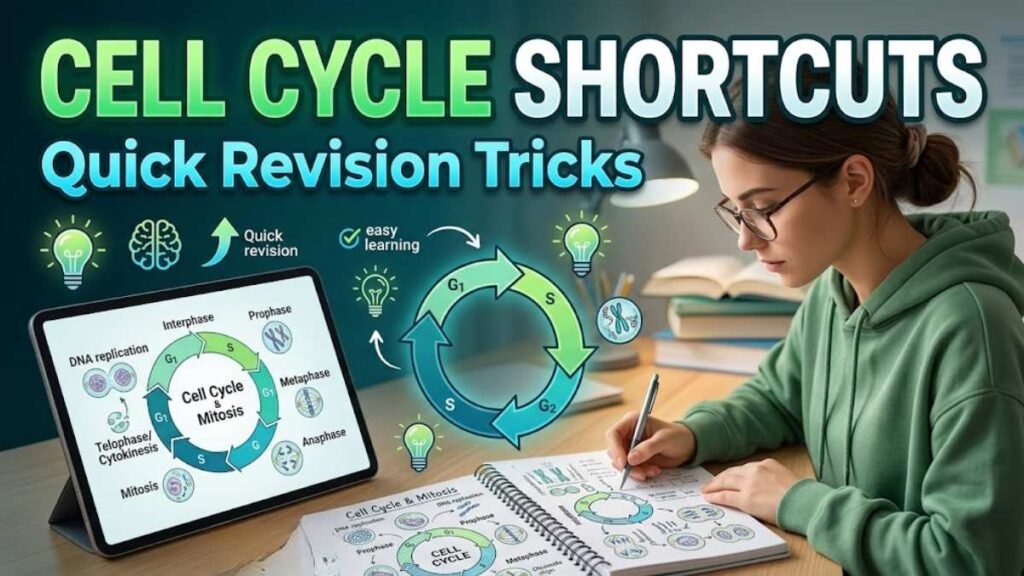

Cell Cycle and Cell Division Shortcuts

Cell Cycle and Cell Division Shortcuts

The chapter “Cell Cycle and Cell Division” is one of the most important and scoring topics in Biology for NEET. However, many students find it difficult to remember phases, sequences, and key events. This is where Cell Cycle and Cell Division Shortcuts become extremely useful. With the right tricks, mnemonics, and conceptual clarity, you can easily retain the entire chapter and answer questions quickly in the exam. In this detailed guide, we will cover the best Cell Cycle and Cell Division Shortcuts along with smart strategies to help you master this topic efficiently. Why This Chapter is Important for NEET High-Weightage Topic Questions are frequently asked from mitosis, meiosis, and cell cycle phases. Concept + Memory Based You need both understanding and memorization. Easy Scoring With proper revision and shortcuts, you can answer questions quickly and accurately. Overview of Cell Cycle The cell cycle is divided into two main phases: Shortcut to Remember Cell Cycle Phases Interphase Stages: G1, S, G2 👉 Shortcut: “Grow – Synthesize – Grow Again” This is one of the simplest Cell Cycle and Cell Division Shortcuts to remember sequence and function. M Phase (Mitosis) Stages The stages of mitosis are: Shortcut to Remember Mitosis Stages 👉 Mnemonic: “Please Make A Tea” (PMAT) This is one of the most popular Cell Cycle and Cell Division Shortcuts used by NEET aspirants. Key Events in Mitosis (Quick Tricks) Prophase 👉 Trick: “Packing Phase” Metaphase 👉 Trick: “Middle Line” Anaphase 👉 Trick: “Apart Phase” Telophase 👉 Trick: “Two Cells Forming” Meiosis: Important for NEET Meiosis has two divisions: Shortcut for Meiosis I Stages Same as mitosis: PMAT 👉 Use same mnemonic:“Please Make A Tea” Special Feature Shortcut for Meiosis I 👉 Key event: Crossing Over (in Prophase I) 👉 Trick: “Mixing of Genes” Differences Between Mitosis and Meiosis (Shortcut Table) Feature Mitosis Meiosis Division Type Single Double Daughter Cells 2 identical 4 different Chromosome No. Same Half 👉 Shortcut:“Mitosis = Maintain, Meiosis = Mix & Reduce” This is one of the most effective Cell Cycle and Cell Division Shortcuts for quick revision. Important Terms Shortcut Cytokinesis Division of cytoplasm 👉 Trick: “Cyto = Cell body division” Karyokinesis Division of nucleus 👉 Trick: “Karyo = Nucleus division” Diagram-Based Shortcut Diagrams are very important in this chapter. 👉 Tip: Common Mistakes Students Make Avoid these mistakes while using Cell Cycle and Cell Division Shortcuts. Smart Study Strategy Step 1: Understand Concepts Don’t rely only on shortcuts—understand basics first. Step 2: Use Mnemonics Apply Cell Cycle and Cell Division Shortcuts for memorization. Step 3: Revise Regularly Repeat the shortcuts daily. Step 4: Practice MCQs Solve NEET-level questions. Quick Revision Tricks Last-Minute Revision Strategy Before the exam: Why Shortcuts Work Final Thoughts The chapter “Cell Cycle and Cell Division” becomes easy when you combine conceptual understanding with smart memorization techniques. These Cell Cycle and Cell Division Shortcuts are designed to help you remember complex processes in a simple and effective way. If you practice these shortcuts regularly and revise consistently, you can easily score full marks from this topic. Remember, success in NEET is not about studying harder—it’s about studying smarter. Master these Cell Cycle and Cell Division Shortcuts, stay consistent, and you’ll be well-prepared to tackle any question from this chapter in the exam.

How to Solve Physics Numericals Faster in NEET Exam

How to Solve Physics Numericals Faster in NEET Exam

Physics is often the most time-consuming section in NEET, and many students struggle to complete the paper on time because of lengthy calculations and tricky numericals. The ability to solve questions quickly without compromising accuracy can make a huge difference in your final score. If you are searching for How to Solve Physics Numericals Faster in NEET Exam, this detailed guide will provide you with proven strategies, expert tips, and practical techniques to boost both your speed and confidence. Why Speed Matters in NEET Physics Limited Time, More Questions You get limited time to solve 180 questions, so spending too much time on Physics can affect your overall performance. Balance Between Speed & Accuracy Solving fast is important, but accuracy is equally critical due to negative marking. Competitive Advantage Students who solve numericals faster get extra time for revision. How to Solve Physics Numericals Faster in NEET Exam: Core Strategy To master speed, you need a combination of concept clarity, practice, and smart techniques. Let’s break it down step by step. Step 1: Build Strong Conceptual Clarity Understand, Don’t Memorize Physics is all about logic. If your concepts are clear, you won’t waste time thinking during the exam. Focus on Fundamentals 👉 Strong basics reduce calculation time significantly. Step 2: Master Important Formulas Create a Formula Notebook Write all formulas chapter-wise and revise daily. Use Short Tricks Memorize formulas in simplified form for quick recall. Revise Regularly Daily revision ensures you don’t forget formulas during the exam. Step 3: Practice Daily (Non-Negotiable) Solve 50–100 Questions Daily Regular practice builds speed naturally. Start Easy → Go Advanced Focus on Quality Solve fewer questions with understanding rather than many without clarity. Step 4: Learn Calculation Shortcuts Approximation Techniques Use approximation where exact values are not required. Avoid Lengthy Calculations Look for options and eliminate incorrect ones quickly. Use Unit Analysis Sometimes, checking units can directly give the answer. Step 5: Improve Question Selection Skills Don’t Attempt All Questions Skip difficult or time-consuming questions initially. Follow the 3-Round Strategy 👉 This is a key technique in How to Solve Physics Numericals Faster in NEET Exam. Step 6: Practice Previous Year Questions (PYQs) Why PYQs Matter Step 7: Take Mock Tests Regularly Simulate Exam Conditions Practice under time constraints. Analyze Performance Identify where you lose time and improve. Track Progress Monitor your speed improvement over time. Time Management Strategy During Exam Ideal Time Allocation Don’t Get Stuck If a question takes more than 1 minute, skip it. Chapter-wise Speed Strategy Mechanics Current Electricity Modern Physics Thermodynamics Common Mistakes That Slow You Down Weak Concepts Leads to confusion and wasted time. Not Revising Formulas Forgetting formulas increases solving time. Overthinking Questions Trust your preparation and avoid unnecessary calculations. Poor Practice Lack of practice reduces speed. Smart Tips to Solve Faster Read Questions Carefully Avoid misinterpretation. Use Rough Work Efficiently Keep calculations organized. Eliminate Options Use logical elimination to save time. Stay Calm Panic slows down your thinking. Daily Practice Plan for Speed Improvement Consistency is the key to mastering How to Solve Physics Numericals Faster in NEET Exam. 30-Day Speed Improvement Plan Week 1–2 Week 3 Week 4 Final Tips for Exam Day Final Thoughts Mastering speed in Physics is not about shortcuts alone—it’s about consistent practice, strong concepts, and smart strategies. This guide on How to Solve Physics Numericals Faster in NEET Exam highlights that speed comes naturally when your preparation is structured and disciplined. Focus on formulas, practice regularly, analyze your mistakes, and stay calm during the exam. With the right approach, you can significantly improve your speed and accuracy in Physics. Remember, every second saved can bring you closer to your dream medical college. Stay consistent, keep practicing, and success will follow.

High-Weightage Topics in NEET Chemistry

High-Weightage Topics in NEET Chemistry

Chemistry is one of the most scoring sections in NEET if prepared strategically. Unlike Physics, it requires a balance of conceptual understanding, memory, and practice. For aspirants aiming to score 160+ marks, focusing on the High-Weightage Topics in NEET Chemistry is the smartest approach. Instead of studying everything randomly, understanding the Chemistry high weightage chapters for NEET 2026 and prioritizing them can significantly boost your score. In this detailed guide, we will break down the High-Weightage Topics in NEET Chemistry, along with preparation strategies to help you maximize your marks. Why Focus on High-Weightage Topics? Smart Preparation Strategy NEET has a vast syllabus, but not all chapters carry equal weight. Focusing on High-Weightage Topics in NEET Chemistry helps you: Better ROI (Return on Effort) High-weightage chapters give more marks per unit effort. Chemistry Section Overview in NEET Chemistry is divided into three parts: To score 160+, you must balance all three while prioritizing High-Weightage Topics in NEET Chemistry. Chemistry High Weightage Chapters for NEET 2026 Based on previous trends, here are the Chemistry high weightage chapters for NEET 2026: Physical Chemistry (High-Weightage Topics) Mole Concept Thermodynamics Equilibrium Electrochemistry These are crucial High weightage topics in neet chemistry for strong numerical performance. Organic Chemistry (High-Weightage Topics) General Organic Chemistry (GOC) Hydrocarbons Aldehydes, Ketones & Carboxylic Acids Amines These chapters are essential High-Weightage Topics in NEET Chemistry for scoring well in Organic. Inorganic Chemistry (High-Weightage Topics) Chemical Bonding Coordination Compounds p-Block Elements d- and f-Block Elements These are key Chemistry high weightage chapters for NEET 2026 you must not ignore. Chapter Wise Weightage Strategy To score 160+, focus more on: Balancing these High weightage topics in neet chemistry is essential for a top score. How to Study High-Weightage Topics Effectively Step 1: Master NCERT NCERT is the base, especially for Inorganic and Organic Chemistry. Step 2: Practice Numericals Physical Chemistry requires daily practice. Step 3: Make Short Notes Write formulas, reactions, and key points. Step 4: Revise Regularly Revision ensures better retention. Topic-wise Preparation Strategy Physical Chemistry Organic Chemistry Inorganic Chemistry Common Mistakes to Avoid Avoid these mistakes while preparing High-Weightage Topics in NEET Chemistry. Daily Study Plan for Chemistry Consistency is key to mastering High-Weightage Topics in NEET Chemistry. Importance of Mock Tests Why They Matter Strategy Last 2-Month Strategy Tips to Score 160+ in Chemistry Following these tips will help you master the Chemistry high weightage chapters for NEET 2026. Final Thoughts Chemistry can be your strongest scoring subject if approached smartly. By focusing on the High-Weightage Topics in NEET Chemistry, understanding the Chemistry high weightage chapters for NEET 2026, and following a structured plan, you can easily target 160+ marks. Remember, success in NEET is not about studying everything—it’s about studying the right topics with consistency. Prioritize the High-Weightage Topics in NEET Chemistry, practice regularly, and revise effectively.

Physics Books for NEET

Best Physics Books for NEET Preparation

Physics is often the most challenging section for NEET aspirants, and relying only on NCERT may not be enough to score high marks. While NCERT builds your foundation, additional reference books are essential for strengthening concepts, improving problem-solving skills, and gaining exam-level confidence. In this detailed guide on the Best Physics Books for NEET, we will explore top expert-recommended books that can help you master Physics effectively and boost your score. Why You Need Reference Books Apart from NCERT Conceptual Depth NCERT explains basics, but deeper conceptual clarity often requires additional resources. Practice & Application NEET Physics is application-based, and practice from multiple sources is essential. Exposure to Different Questions Reference books provide a variety of MCQs and numerical problems. 👉 That’s why choosing the Best Physics Books for NEET is crucial for serious aspirants. Top Recommended Books for NEET Physics Here are some of the most trusted and widely used books: 1. Concepts of Physics by H.C. Verma (Vol 1 & 2) This is one of the most popular and reliable books for building strong fundamentals. Why it’s useful: 👉 This is often considered the Best Book for NEET Physics for beginners because it strengthens your basics. 2. Objective Physics for NEET by DC Pandey A highly recommended book for practice and MCQs. Why it’s useful: 👉 It is one of the Best Physics Books for NEET when it comes to improving speed and accuracy. 3. Cengage Objective Physics for NEET (Vol 1 & 2) A comprehensive book for advanced preparation. Why it’s useful: 👉 Ideal for students aiming for 150+ marks in Physics. 4. Errorless Physics for NEET Perfect for extensive practice. Why it’s useful: 👉 Many toppers recommend it as part of the Best Physics Books for NEET for practice. 5. MTG NEET Physics Guide A good book for revision and practice. Why it’s useful: Best Book for NEET Physics: Which One Should You Choose? Choosing the Best Book for NEET Physics depends on your level: Beginner Level Intermediate Level Advanced Level 👉 The right combination of books is more important than using too many resources. How to Use These Books Effectively Step 1: Complete NCERT First Build your base before moving to reference books. Step 2: Focus on One Book at a Time Avoid confusion by using limited resources. Step 3: Practice Daily Solve questions consistently. Step 4: Revise Regularly Revisit formulas and concepts. Common Mistakes While Choosing Books Using Too Many Books This leads to confusion and incomplete preparation. Ignoring NCERT NCERT is still the foundation. Skipping Practice Books are useless without solving questions. Ideal Book Combination Strategy For Concept + Practice For High Score (150+) For Revision 👉 This combination is often considered among the Best Physics Books for NEET strategies. Tips to Score High in NEET Physics Final Thoughts Choosing the right study material can make a huge difference in your preparation. This guide on the Best Physics Books for NEET highlights that while NCERT is essential, additional books are necessary for mastering concepts and improving performance. There is no single Best Book for NEET Physics—the best book is the one you complete thoroughly with proper understanding and practice. Stick to limited resources, revise regularly, and focus on consistency. With the right books and strategy, scoring high in NEET Physics is absolutely achievable.

Organic Chemistry Roadmap for NEET

Organic Chemistry Roadmap for NEET

Organic Chemistry is often considered one of the most challenging yet scoring sections in NEET. Many students struggle to remember reactions, mechanisms, and conversions, which leads to confusion and low confidence. However, with the right approach, Organic Chemistry can become one of your strongest subjects. This detailed Organic Chemistry Roadmap for NEET will help you understand how to study smartly, remember reactions effectively, and score high in the exam. Why Organic Chemistry Feels Difficult Too Many Reactions Students often feel overwhelmed by the number of reactions they need to remember. Lack of Conceptual Understanding Memorizing without understanding mechanisms leads to confusion. Poor Revision Strategy Without regular revision, reactions are easily forgotten. Organic Chemistry Roadmap for NEET: Step-by-Step Strategy To master Organic Chemistry, you need a structured plan. This Organic Chemistry Roadmap for NEET focuses on clarity, practice, and revision. Step 1: Build Strong Basics Understand General Organic Chemistry (GOC) Start with: 👉 GOC is the foundation of the entire Organic Chemistry Roadmap for NEET. Step 2: Learn Reaction Mechanisms Focus on “Why” Instead of “What” Instead of memorizing reactions, understand: Types of Reactions Understanding mechanisms makes it easier to remember reactions. Step 3: Study Chapter-wise Reactions Follow a systematic order: This structured approach is a key part of the Organic Chemistry Roadmap for NEET. Step 4: Make Reaction Notes Create Short Notes Use Tables Organize similar reactions together for easy revision. Step 5: Practice Regularly Solve MCQs Daily Practice helps you: Solve Previous Year Questions PYQs help you identify important reactions. Step 6: Revise Again and Again Revision is the backbone of this Organic Chemistry Roadmap for NEET. Revision Plan How to Remember All Organic Chemistry Reactions Use Flowcharts Visual representation helps in better retention. Learn Patterns Many reactions follow similar patterns—identify them. Group Similar Reactions Study similar reactions together to avoid confusion. Use Mnemonics Create short tricks to remember reagents and steps. Practice Writing Write reactions repeatedly—it improves memory. Chapter-wise Preparation Strategy Hydrocarbons Haloalkanes & Haloarenes Alcohols, Phenols & Ethers Aldehydes & Ketones Amines This chapter-wise approach strengthens your Organic Chemistry Roadmap for NEET. Common Mistakes to Avoid Mugging Up Without Understanding This leads to confusion during exams. Ignoring NCERT Many questions are directly from NCERT. Not Practicing Enough Organic Chemistry requires application. Skipping Revision Without revision, reactions are forgotten. Daily Study Plan for Organic Chemistry Ideal Routine Consistency is key to mastering the Organic Chemistry Roadmap for NEET. Importance of NCERT in Organic Chemistry Why NCERT Matters Always align your preparation with NCERT. Tips to Score High in Organic Chemistry Following these tips will strengthen your Organic Chemistry Roadmap for NEET. Final Revision Strategy In the last months before NEET: Final Thoughts Organic Chemistry may seem difficult at first, but with the right strategy, it becomes manageable and even enjoyable. This Organic Chemistry Roadmap for NEET emphasizes understanding, practice, and consistent revision as the keys to success. If you follow this structured Organic Chemistry Roadmap for NEET, you will not only remember reactions easily but also apply them confidently in the exam. Stay consistent, trust the process, and keep revising. With the right approach, mastering Organic Chemistry for NEET is absolutely achievable—and it can become your scoring subject.

_Important Chapters for NEET Biology

Most Important Chapters for NEET Biology

Biology is the most scoring subject in NEET, contributing 50% of the total marks. For aspirants aiming for top ranks, mastering the Important Chapters for NEET Biology is not optional—it is essential. With a smart strategy and a clear understanding of Chapter wise weightage for NEET 2026, students can maximize their scores without wasting time on low-priority topics. In this detailed guide, we will break down the Important Chapters for NEET Biology, provide a weightage-based analysis, and help you prepare effectively for NEET 2026. Why Biology is the Game-Changer in NEET Biology is considered the easiest and most scoring subject because: If you focus on the Important Chapters for NEET Biology, you can easily score 330+ marks. Chapter Wise Weightage for NEET 2026 Understanding the Chapter wise weightage for NEET 2026 helps you prioritize your preparation. Below is a general trend based on previous years: Class 11 Biology Weightage Class 12 Biology Weightage This Chapter wise weightage for NEET 2026 clearly shows that some chapters carry more importance than others. Most Important Chapters for NEET Biology (High Weightage) If you want to score high, focus on these Important Chapters for NEET Biology: Human Physiology Genetics & Evolution Ecology & Environment Cell Structure & Function Biotechnology These Important Chapters for NEET Biology should be your top priority. Medium Priority Chapters for NEET Biology After completing high-weightage topics, focus on: These are also Important Chapters for NEET Biology, but slightly less scoring compared to the top ones. Low Priority Chapters (But Don’t Ignore) Even though these chapters have lower weightage, they still matter: NEET can ask unexpected questions, so cover all chapters at least once. NEET Important Chapters Biology 2026: Smart Preparation Strategy To crack NEET, you must prepare strategically. Here’s how to approach NEET important chapters Biology 2026: Focus on NCERT Line-by-Line Every line in NCERT is important. Many questions are directly picked from it. Revise Multiple Times Biology requires memory. Revise each chapter at least 3–4 times. Practice MCQs Solve chapter-wise questions regularly. Use Diagrams Many questions are based on diagrams—practice them well. How to Study Important Chapters for NEET Biology Effectively Step 1: Read NCERT Thoroughly Understand concepts and highlight key points. Step 2: Make Short Notes Summarize important points for quick revision. Step 3: Practice Questions Solve MCQs after every chapter. Step 4: Revise Weekly Regular revision is essential for retention. Common Mistakes Students Make Avoid these mistakes while preparing Important Chapters for NEET Biology. Tips to Score 340+ in Biology Mastering the Important Chapters for NEET Biology can easily push your score above 340. Final Strategy for NEET Biology 2026 In the last few months: Following this approach will help you excel in NEET important chapters Biology 2026. Final Thoughts Biology is your biggest opportunity to score high in NEET. By focusing on the Important Chapters for NEET Biology, understanding the Chapter wise weightage for NEET 2026, and preparing strategically, you can maximize your marks with minimum effort. Remember, success in NEET is not about studying everything—it’s about studying the right things. Prioritize the Important Chapters for NEET Biology, stay consistent, and keep revising. With the right approach and dedication, cracking NEET 2026 with a high Biology score is absolutely achievable.

How to Master Physics for NEET

How to Master Physics for NEET

Physics is often considered the most challenging subject in NEET preparation. Many students struggle with numericals, concepts, and time management, which leads to lower scores despite putting in effort. However, the truth is—Physics is not difficult; it just requires the right approach. If you are searching for How to Master Physics for NEET or wondering How to study physics for NEET, this detailed guide will help you build a strong strategy and turn Physics into your scoring subject. Why Students Find Physics Difficult Lack of Conceptual Clarity Many students try to memorize formulas without understanding the concepts behind them. Fear of Numericals Physics involves calculations, which can be intimidating without regular practice. Weak Foundation If basics from Class 11 are not clear, advanced topics become difficult. Irregular Practice Physics requires daily practice, unlike theory-heavy subjects. The Right Mindset to Master Physics Stop Fearing Physics Physics becomes easy when you start understanding it logically instead of memorizing. Be Patient Concepts may take time to understand—don’t rush the process. Stay Consistent Daily practice is the key to improvement. How to Master Physics for NEET: Step-by-Step Strategy Step 1: Focus on Conceptual Clarity Before solving questions, make sure you understand: 👉 If your concepts are clear, questions become easier. Step 2: Start with NCERT + Basic Books NCERT helps in building fundamentals, especially for Modern Physics. After that, move to: Step 3: Practice Numericals Daily Physics improves only with practice. Step 4: Make a Formula Notebook Write all important formulas chapter-wise and revise them daily. 👉 This helps during quick revision before exams. Step 5: Solve Previous Year Questions (PYQs) PYQs give you: Step 6: Take Mock Tests Regularly 👉 Always analyze your mistakes after every test. How to Study Physics for NEET (Daily Plan) Ideal Daily Routine Consistency is more important than long study hours. Important Topics to Focus in Physics High-Weightage Chapters 👉 Master these topics first to maximize your score. Chapter-wise Approach Step 1: Read Theory Understand concepts clearly. Step 2: Solve Basic Questions Start with simple problems. Step 3: Move to Advanced Questions Gradually increase difficulty level. Step 4: Revise Revise formulas and key concepts. Common Mistakes Students Make in Physics Memorizing Instead of Understanding Physics is about logic, not mugging up. Skipping Practice Without solving questions, improvement is impossible. Ignoring Weak Topics Focus more on areas where you struggle. Not Revising Formulas Forgetting formulas leads to mistakes in exams. Smart Tips to Improve Physics Score Use Visualization Imagine real-life scenarios to understand concepts better. Break Down Problems Solve questions step by step. Learn from Mistakes Maintain an error notebook and revise it regularly. Time Management Don’t spend too much time on a single question. How to Overcome Fear of Physics Start with Easy Questions Build confidence gradually. Practice Regularly Consistency reduces fear. Seek Help Ask teachers or mentors when stuck. Stay Positive Believe that you can improve. Revision Strategy for Physics Daily Revision Revise formulas and concepts every day. Weekly Revision Revise all chapters studied during the week. Before Exams Focus on short notes and formula sheets. Role of Mock Tests in Physics Preparation Why They Are Important Test Strategy How Long Does It Take to Master Physics? There is no fixed timeline, but with: You can see significant improvement within 2–3 months. Final Thoughts Physics may seem tough at first, but with the right approach, it can become your strongest subject. This guide on How to Master Physics for NEET emphasizes that success in Physics depends on understanding concepts, practicing regularly, and staying consistent. If you truly want to know How to study physics for NEET, remember this: don’t fear the subject—face it daily with the right strategy. Over time, your confidence and performance will improve. Stay consistent, trust your preparation, and keep practicing. With the right mindset and effort, mastering Physics for NEET is absolutely achievable.

Notes Making Tips for NEET

Notes Making Tips for NEET

Preparing for NEET is not just about studying hard—it’s about studying smart. One of the most powerful tools that can significantly boost your preparation is effective note-making. Many toppers credit their success to well-structured notes that helped them revise quickly and retain concepts better. If you are searching for Notes Making Tips for NEET or wondering how to make notes for NEET, this detailed guide will help you build a system that actually works. Why Notes Making is Important for NEET Preparation Helps in Quick Revision NEET has a vast syllabus, and revising everything from textbooks again and again is not practical. Notes help you revise faster. Improves Retention Writing things down improves memory and understanding. Saves Time Before Exams Short notes are extremely helpful during last-minute revision. Keeps Your Preparation Organized Notes help you track what you have studied and what needs revision. How to Make Notes for NEET: Step-by-Step Guide Step 1: Understand Before You Write Never start writing notes without understanding the concept. Notes should simplify learning, not complicate it. Step 2: Use NCERT as Your Base NCERT is the most important source for NEET. Make notes directly from NCERT, especially for Biology and Chemistry. Step 3: Keep Notes Short and Crisp Avoid writing long paragraphs. Use: Step 4: Highlight Important Points Use colors or underlining to mark formulas, definitions, and key concepts. Step 5: Update Notes Regularly Add new points from mock tests, previous year questions, and mistakes. Subject-wise Notes Making Tips for NEET Biology Notes Strategy Focus on NCERT Lines Use Diagrams Keep It Concise Biology notes should be short because the subject is memory-based. Chemistry Notes Strategy Physical Chemistry Organic Chemistry Inorganic Chemistry Physics Notes Strategy Focus on Concepts Practice-Based Notes Formula Sheet Maintain a separate formula notebook for quick revision. Best Format for NEET Notes Use Bullet Points Avoid long paragraphs—keep it simple and clear. Flowcharts & Mind Maps These help in quick understanding and revision. Use Keywords Focus on important terms instead of full sentences. Keep Separate Notebooks Digital vs Handwritten Notes Handwritten Notes (Recommended) Digital Notes 👉 Best approach: Use handwritten notes and digitize important ones if needed. Common Mistakes to Avoid While Making Notes Writing Everything Don’t copy entire books—write only important points. Making Notes Without Understanding This leads to confusion during revision. Too Many Colors and Designs Keep it simple and clean. Not Revising Notes Notes are useless if you don’t revise them regularly. When to Make Notes for NEET During First Reading Make basic notes while studying a chapter. During Revision Add extra points and simplify notes further. After Mock Tests Update notes with mistakes and important learnings. How to Revise Notes Effectively Daily Revision Spend at least 1–2 hours revising notes. Weekly Revision Revise all subjects once a week. Before Exams Use short notes for quick revision. Smart Note-Making Techniques Cornell Method Divide your page into sections: Mind Mapping Use diagrams to connect concepts visually. Flashcards Useful for formulas, reactions, and facts. How Notes Help You Score Higher Faster Revision You can revise the entire syllabus quickly. Better Accuracy Clear concepts reduce mistakes. Improved Confidence Well-prepared notes make you exam-ready. Notes Making Tips for NEET Toppers Follow Final Thoughts Effective note-making is one of the most underrated yet powerful strategies in NEET preparation. These Notes Making Tips for NEET can help you create a system that saves time, improves retention, and boosts your overall performance. If you truly want to understand how to make notes for NEET, remember this: your notes should simplify your revision, not complicate it. Keep them short, clear, and regularly updated. With the right notes and consistent revision, you can significantly improve your chances of scoring high and securing admission in top medical colleges.

Last 6 Months Strategy for NEET

Last 6 Months Strategy for NEET: Complete Guide

Preparing for NEET in the final six months can feel overwhelming, especially if you are starting late or feel underprepared. However, with the right approach, discipline, and a smart plan, it is absolutely possible to achieve a high score. This detailed guide on the Last 6 Months Strategy for NEET will help you understand how to maximize your preparation time and build a winning strategy. If you are wondering How to crack NEET in 6 months from zero level, this blog will give you a practical, step-by-step roadmap. Is It Possible to Crack NEET in 6 Months? The Reality Check Yes, it is possible—but only with: What You Need to Accept Your success depends on how efficiently you use these 6 months. Complete 6-Month Roadmap for NEET To make things simple, divide your preparation into 3 phases: Phase 1: Foundation Building (Month 1–2) Focus Area What to Do Study Plan Phase 2: Practice & Strengthening (Month 3–4) Focus Area What to Do Key Tip This phase is crucial for improving accuracy and speed. Phase 3: Mock Tests & Revision (Month 5–6) Focus Area What to Do Golden Rule “Revision + Test Analysis = High Score” Daily Study Plan for 6 Months Preparation Ideal Daily Routine Study Hours Subject-Wise Strategy for NEET Biology (Highest Scoring Subject) Strategy Goal Score 330+ marks Chemistry Strategy Physical Chemistry Organic Chemistry Inorganic Chemistry Goal Score 150+ marks Physics Strategy Key Focus Important Topics Goal Score 140+ marks How to Crack NEET in 6 Months from Zero Level If you are starting from zero, follow this approach: Step 1: Focus Only on NCERT Avoid multiple books—NCERT should be your main source. Step 2: Study Smart, Not Hard Understand concepts instead of memorizing blindly. Step 3: Practice Daily Even if it’s 50–100 questions per day, consistency matters. Step 4: Revise Regularly Without revision, learning is incomplete. Step 5: Take Mock Tests Start with weekly tests and increase frequency. Importance of Mock Tests Why They Matter Test Strategy Revision Strategy for 6 Months Multiple Revisions Use Short Notes Helps in quick revision before exams. Common Mistakes to Avoid Studying Too Many Books Stick to limited and reliable resources. Ignoring NCERT This is the biggest mistake. Skipping Tests Tests are essential for improvement. Lack of Consistency Irregular study leads to poor results. Time Management Tips Follow a Fixed Routine Consistency improves productivity. Use Pomodoro Technique Avoid Distractions Limit mobile and social media usage. Mental Strength & Motivation Stay Positive Believe that you can achieve your goal. Avoid Comparison Focus on your own progress. Take Breaks Mental health is important for performance. Final 30-Day Strategy What to Do What to Avoid Final Thoughts The Last 6 Months Strategy for NEET is all about smart planning, consistent effort, and focused execution. If you are serious about How to crack NEET in 6 months from zero level, remember that discipline and strategy matter more than anything else. Focus on NCERT, practice regularly, revise consistently, and analyze your mistakes. Even if you are starting late, you still have a strong chance to succeed. Your journey may be challenging, but with the right mindset and preparation, cracking NEET in 6 months is absolutely achievable.

Fill this form for admission


    This will close in 120 seconds