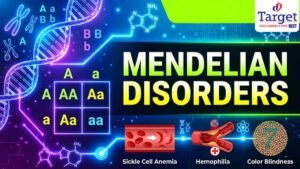

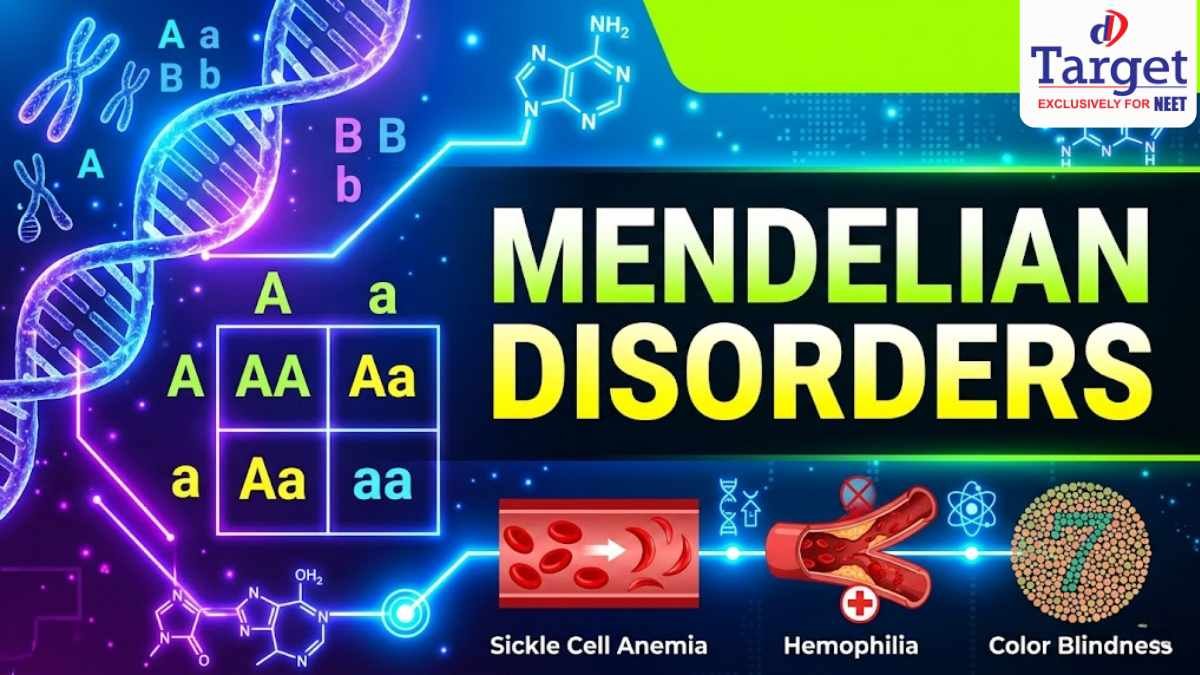
Genetics is one of the most important and scoring sections in NEET Biology, and understanding Mendelian Disorders for NEET is essential for every aspirant. These disorders are frequently asked in exams and are directly based on NCERT concepts.
In this detailed, human-written and SEO-friendly blog, you will learn the concept, types, inheritance patterns, and important Mendelian disorders examples in a simple and exam-oriented way.
What are Mendelian Disorders?
Mendelian disorders are genetic diseases that are caused by mutations in a single gene and follow Mendel’s laws of inheritance.
These disorders are passed from parents to offspring through specific inheritance patterns such as dominant, recessive, or sex-linked traits.
Understanding Mendelian Disorders for NEET helps in solving pedigree-based and concept-based questions easily.
Types of Mendelian Disorders
Mendelian disorders are mainly classified into three types:
1. Autosomal Dominant Disorders
In this type, only one copy of the defective gene is enough to cause the disorder.
Key Features:
- Appears in every generation
- Affected person has at least one affected parent
- Both males and females are equally affected
Example:
- Huntington’s disease
2. Autosomal Recessive Disorders
In this type, both copies of the gene must be defective for the disease to appear.
Key Features:
- May skip generations
- Parents are often carriers
- More common in consanguineous marriages
Mendelian Disorders Examples:
- Sickle Cell Anemia
- Phenylketonuria
3. Sex-Linked Disorders
These disorders are linked to genes present on sex chromosomes (usually X chromosome).
Key Features:
- Mostly affects males
- Females are often carriers
Mendelian Disorders Examples:
- Hemophilia
- Color Blindness
Important Mendelian Disorders Examples for NEET
Here are the most important and frequently asked disorders:
1. Sickle Cell Anemia
- Caused by mutation in hemoglobin gene
- RBCs become sickle-shaped
- Leads to poor oxygen transport
2. Phenylketonuria (PKU)
- Caused by lack of enzyme phenylalanine hydroxylase
- Leads to mental retardation if untreated
3. Hemophilia
- Blood clotting disorder
- Caused by absence of clotting factors
- X-linked recessive disorder
4. Color Blindness
- Inability to distinguish certain colors
- X-linked disorder
- Common in males
5. Thalassemia
- Affects hemoglobin production
- Leads to anemia
- Autosomal recessive disorder
Inheritance Patterns (Important for NEET)
Understanding inheritance is key to solving questions.
Dominant:
- One allele is enough
Recessive:
- Both alleles required
Sex-linked:
- Linked to X chromosome
👉 Pedigree analysis questions are often based on these patterns.
Why Mendelian Disorders are Important for NEET
- Frequently asked in exams
- Direct NCERT-based questions
- Important for genetics chapter
- Helps in solving pedigree problems
Tips to Master Mendelian Disorders
- Learn all important Mendelian disorders examples
- Understand inheritance patterns clearly
- Practice pedigree questions
- Revise NCERT diagrams and tables
Common Mistakes to Avoid
- Confusing dominant and recessive traits
- Forgetting examples
- Ignoring sex-linked inheritance
- Not practicing questions
Real-Life Importance of Mendelian Disorders
- Helps in genetic counseling
- Important in medical diagnosis
- Useful in understanding hereditary diseases
Quick Revision Summary
- Mendelian disorders → Single gene disorders
- Types → Dominant, recessive, sex-linked
- Common examples → Sickle cell anemia, hemophilia, color blindness
Final Thoughts
Mastering Mendelian Disorders for NEET is essential for scoring well in genetics. With proper understanding of inheritance patterns and regular revision of Mendelian disorders examples, you can easily solve even tricky questions.
Stay consistent, focus on NCERT, and practice regularly to make this topic your strength.